
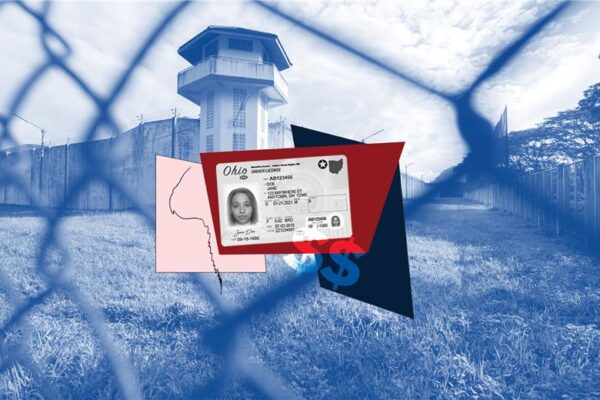
The vast majority of people incarcerated in Ohio will return home, and we want our neighbors navigating the reentry process to do so successfully. It’s for this reason that the ACLU of Ohio is a proponent of current legislation that stands to make successful reentry a reality in ways that do not exist under current law.
As the first half of the 136th General Assembly (2025-2026) wraps up, we’re excited that lawmakers appear to share this goal by advancing House Bill 393 and House Bill 296. When a person leaves incarceration, they’re tasked with an array of competing priorities that have a quite direct impact on the likelihood that they reenter successfully. Oftentimes, this includes obtaining vital documents; accessing safe, affordable housing; securing employment; and adjusting to life after incarceration.
House Bill 393 is a bipartisan bill sponsored by Representatives Gary Click and Darnell Brewer extending an important program providing state identification to people leaving incarceration and returning to their communities. The previous General Assembly created a program to ensure that people leaving Ohio’s prisons have a state ID card. HB 393 extends this program to other places from where our neighbors reenter, specifically community-based correctional facilities and programs. As a result, more returning community members will be better equipped to access the necessities critical to their reentry. House Bill 393 passed the House with a unanimous vote and will be considered by the Senate in 2026.
House Bill 296 is sponsored by Representative Melanie Miller and proposes a grace period for court-imposed fines and fees in the period immediately following a person’s release. Again, the legislation recognizes a reality faced by our returning neighbors. We know that collateral consequences to criminal convictions limit employment and affordable housing opportunities. Still, a person returning from incarceration must find a way to make the math of their resumed expenses work. HB 296 recognizes these competing financial needs and creates a grace period of court-imposed fines and fees related to the person’s criminal case. The bill does not propose eliminating those fines and fees but instead recognizes that folks will be in a better position to pay fines and fees once they have a chance to get their feet on the ground. House Bill 296 was favorably reported by the House Judiciary Committee in 2025 and is expected to be voted on by the House in 2026.
While neither of these bills are an end-all for successful reentry on their own, both recognize the Legislature can pave pathways to success in a reality of reentry chock-full of hurdles and roadblocks. With a shared value placed on seeing our neighbors return from incarceration successfully, we’re excited to work with the General Assembly on these bills when they get back to work in 2026.