
News & Commentary
COVID-19 Highlights Long-Known Issues of Systemic Racism
At least 27 states and Washington D.C. have begun releasing racial breakdowns of COVID-19 in their jurisdictions. The data released so far has shown that by in large Black people are dying at disturbingly disproportionate rates. For example, Black people represent 43 percent of COVID-19 deaths in Illinois, but make up only 14 percent of the state’s population. In Louisiana, Black people make up 32 percent of the state but represent almost 60 percent of COVID-19 related deaths. Similarly alarming, in Mississippi, Black people make up 38 percent of the population but represent 52 percent of COVID-19 cases and 63 percent of reported deaths. Cities with larger Black and Latino communities are especially seeing the inequalities in COVID-19 cases and deaths. In Milwaukee, Black people make up 53 percent of people who have died from COVID-19, while making up only 39 percent of the city’s population. In New York City, which now has more confirmed cases than anywhere else in the world, Latinos make up 29 percent of the population but 34 percent of COVID-19 deaths and Black people make up 22 percent of the population but 28 percent of deaths.


Voting Rights Groups Push Back On Senate Bill 294
To: Speaker Householder, Minority Leader Sykes, Senate President Obhof, Minority Leader Kenny Yuko, all members of the Ohio General Assembly
By Freda J. Levenson

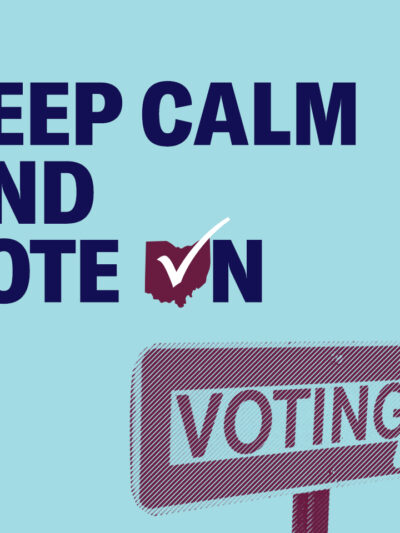
Ohioans: Here’s How to Keep Calm and Vote on
If you thought voting was confusing any other time than right now, coronavirus has most certainly beaten that standard by a long shot. With schools shutting down, polling locations changing last minute due to vulnerable population concerns, and the number of cases increasing daily, registered voters might be feeling panicked and wondering if you should even go out to vote.We’re here to tell you: Keep calm and VOTE ON!And here’s how to do it in the most informed way possible.FIRST – let’s talk about absentee voting. Are you a student who recently had to leave the area you vote in because your school closed without warning? Are you wary of voting in-person due to serious health concerns? Well, we’ve got good news: you still have enough time to vote absentee. The application for absentee voting must be received by noon on March 14 and all ballots most by postmarked by Monday, March 16. More details can be found here.SECOND – If you’re not interested in absentee voting but want to know another alternative, you have the option of early in-person voting. You can cast a ballot at your County Board of Elections on these dates and times:Friday March 13: 8AM-7PMSaturday March 14: 8AM-4PMSunday March 15: 1PM-5PMMonday March 16: 8AM-2PMTHIRD – You could take the standard route and vote on Election Day, March 17, from 6:30am – 7:30pm.Here is what you need to do before, during, and after. Read on!Before the big day:Make sure you’re still registered.With the voter purging this last year – and nearly 20% getting wrongfully purged, you may want to check to see if you’re still a registered voter. You are able to check on the Ohio Secretary of State’s website here.Find out your polling information and district information – check multiple times since polling locations are being changed due to the outbreak.Fortunately, the site also gives you information on your voting precinct and polling location. Furthermore, it will let you know what your U.S. Congressional District, Senate District, and State Rep. District is. There are multiple things to do with this information, read on to find out.Plan your day accordingly.With your polling location information on hand, it is imperative to jot down exactly where you can go to vote the day of – and make sure to plan accordingly. Allow yourself enough buffer time in case there is a long line you have trouble finding parking, or any other sort of obstacle that may arise (and given the unpredictability of the times we’re in, there might be extra-long lines).Figure out who is running and what their policies are.Not even going to lie – like so many others, I’ve been guilty of showing up to the polls ready to vote for who I believed the next POTUS should be – and so often, I’ve neglected to really understand who I was putting into my statehouse. After finally seeing the light and realizing just how important the statehouse is when it comes to my rights, I’m making sure to do my homework on all those who are running – and you should too!On March 17th, 2020:Make sure you have everything you need to meet the ID requirements to vote before leaving the house.According to the Secretary of State website, Ohio law requires that every voter, upon appearing at the polling place to vote, must announce his or her full name, current address and proof of identity. All acceptable forms of ID can be found here.Get to your polling location and VOTE!This one is pretty self-explanatory. Just don’t forget to grab an “I voted” sticker on your way out! One caveat – do yourself and fellow Ohioans a favor and wash your hands before coming into your polling location and immediately after voting.After you vote – whether absentee or in-person and (hopefully) post-Coronavirus:Pretty soon after the primaries, each party will put forward their candidates and gear up for November 3, 2020 – Election Day. Sure, you have the option of doing everything listed in this article for that day and be on your merry way… or you can do more.The Ohio registration deadline for the Nov. 2020 Election is October 5, 2020.That’s over half a year to make sure that everyone you know is registered to vote – and it’s more than enough to even get people you don’t even know signed up. You can campaign and educate others – not only on who is running for president, but you can also let people know about those who are running for seats to represent Ohio in Congress or in the Ohio Statehouse itself. If no candidate gets you super excited to knock on doors, perhaps there’s a ballot initiative that may excite you enough to do so.Regardless, what’s imperative to note here is that there is so much more that goes into just showing up and voting. Preparation is key – whether that’s making sure you have everything you need to vote or educating yourself on the people who are fighting for your vote.But, more importantly, making your voice – and ensuring other voices are also – heard is something anybody can do.Including you.Remember you and they are the difference and the voice of things yet to come.
By Sarah Khan-Williamson
ACLU of Ohio Expresses Concern in Letter to Gov. DeWine Regarding the Prevention & Management of COVID-19 for Incarcerated Ohioans
On Tuesday, March 10, 2020, ACLU of Ohio Executive Director Ben Guess and Legal Director Freda Levenson sent Ohio Governor Mike DeWine a letter urging an immediate plan of action regarding the state’s prevention and management of COVID-19 and its impact on incarcerated Ohioans.
By ACLU of Ohio


Stay Informed
Sign up to be the first to hear about how to take action.
By completing this form, I agree to receive occasional emails per the terms of the ACLU’s privacy statement.
By completing this form, I agree to receive occasional emails per the terms of the ACLU’s privacy statement.