
News & Commentary
House Bill 431 – Opponent Testimony
Below is our Chief Lobbyist Gary Daniels’ opponent testimony on Senate Bill 260. This was delivered to the House Criminal Justice Committee Committee on February 26, 2020.
By Gary Daniels
All Ohioans Can Live up to the Legacy of Black History Month – Here’s How
Late last year, the Economics Policy Institute Economic Analysis and Research Network (EARN) released a new report which made something glaringly obvious: Ohio still has a major racism problem. The evidence is there in many glaring ways – for instance, Ohio is in the top ten states with the largest ratio between black and white unemployment; Dayton and Cleveland are two of the six metropolitan areas in which poverty among the black population exceeds 40%; and like many Midwestern states, Ohio also imprisons African Americans at more than five times the rate of white individuals.Here’s the thing, if there is anything that we can do to honor the legacy of Black History Month, then we must do exactly what the Director of EARN, Naomi Walker, suggests – we must hold our policymakers accountable so they “recognize the economic harm that structural racism has caused Black families in all parts of the country. In a time of federal inaction, states must step up to address disparate economic outcomes by strengthening public education, bolstering workers’ rights and strengthening labor standards, and eliminating discrimination.”So you might ask: how do we hold our policymakers accountable?To start, we must elect lawmakers who are well aware of the impact of racist and classist policies and actively work against the grain of such. And the timing couldn’t be any better – 2020 is Election Year, and we can take advantage of this opportunity in just a few months!Then we can do more.We can also go beyond this in several ways – by actively holding our own leaders and authoritative figures in our workplaces and in the school system accountable when it comes to racial divides and discrimination, we can make changes in our everyday lives to combat this systemic racism.But then we must go a step further.Organizations such as the Tamir Rice Foundation, Black Lives Matter, Columbus Urban League, Ohio Conference of the NAACP, the United Black Fund of Greater Cleveland, INC – and many more across the state of Ohio – need support in a variety of different capacities that many of us can fill in one way or another. Whether that means financial support, volunteering for events, or even just showing up and supporting these organizations and individuals involved with them, everything you do can make a difference.We must stop letting Ohio take the top ranks of perpetuating systemic racism.And we must also do it in a way that doesn’t make us “saviors,” but posits us to recognize how we’ve maintained this systemic oppression and how to actively dismantle the systems that have been advanced by the people who have been placed in authoritative roles by us.Only in this way can we live up to the legacy of Black History Month.And it is imperative that we should.We owe it to this beautiful state – and more importantly, we owe it to the individuals and communities that we are celebrating this month of February.
By Sarah Khan-Williamson
Ohioans might have been confused about abortion laws. Not anymore.
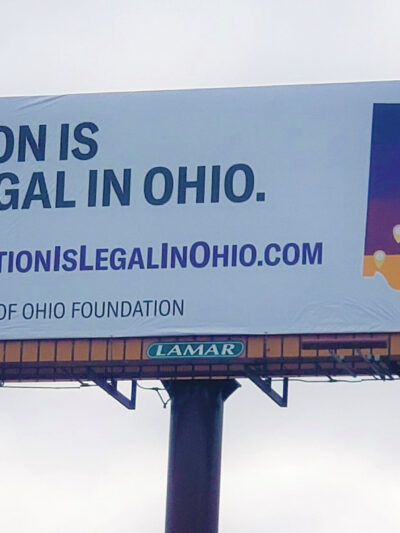
In 2019, I moved to Columbus from Arizona four days after Senate Bill 23 was introduced in late February.Before I had even gotten to unpack the last of my items, the bill, which was dubbed by anti-choice groups as the “Heartbeat Bill”, was signed into law in early April. It followed in the quick and fast footsteps of similar heartbeat bills that were introduced and passed in Alabama, Kentucky, Georgia, Mississippi, and Missouri.Being born and raised in the D.C., Maryland, and Northern Virginia area, I was lucky enough to never have to deal with restrictive laws that ultimately decided what would happen with my body when it comes to reproductive health. But now I officially lived in a state that was making headlines all across the world for passing an incredibly egregious law that not only restricted abortions to a nearly impossible time frame, but essentially was outlined in a way that it ultimately was a near-total abortion ban.My friends and family all across the nation (and the world) would ask me what was going on in the state, constantly referring to Ohio as “crazy territory where women had no rights and couldn’t get abortions.” I, like so many other Ohioans, shrugged my shoulders, praying and hoping that the law would be overturned or news would break that it was all a sham. But the news never came to me. My social media timelines were stark silent after they had so frequently been inundated with news of all the bans being signed into law.It wasn’t until I started working at the ACLU of Ohio four months later that I realized that despite this bill being signed into law, abortion is still legal in Ohio.And actually, it’s still legal in EVERY state that the so-called “Heartbeat Bill” was passed in. How?In particular for Ohio, before DeWine’s signature could even dry on SB 23, the ACLU of Ohio, Planned Parenthood, and Preterm-Cleveland were already gearing up to take the state to court. And we did just that – on May 15th, we filed a lawsuit challenging this near-total ban. Due to this, a federal judge blocked the law from going into effect in early July. Since then, we’ve filed a motion for permanent injunction on the ban, so again I reiterate, abortion is still legal in Ohio.Here’s the thing – while media outlets from all over covered the insanity that ensued when the bill was introduced and subsequently signed into law, the same attention was not given to the trajectory of the law afterwards due to a myriad of reasons. And because of that, there is a common belief that the law is effective – when it simply is not. The fact that there is utter confusion around the legality of abortion in Ohio has been confirmed by Preterm staff, who have stated that clinics in West Virginia have reported an increase of Ohio residents seeking abortion in their state due to the rampant misinformation.Let that sink in.Individuals are crossing state lines into West Virginia, Pennsylvania, Michigan, and Indiana in order to obtain abortions that they have access to in their very own state – and likely their own city! And this isn’t even taking into account of the individuals across the state who are carrying out pregnancies under the misunderstanding that they cannot get an abortion in Ohio and do not have the means to travel out of state in order to get one.And this is exactly why we recently took to the highways and streets with ten massive billboards positioned all across the state with a very simple message: abortion is still legal in Ohio.Because it is.It’s a fact.These billboards aren’t an attempt to troll anyone or a subtle move to agitate abortion proponentsThey are to let people know the truth.And every Ohioan deserves to know the truth.Which is, simply put, that despite the “Heartbeat Bill” being signed into law last year – and another, even more outrageous bill being introduced – abortion is still legal in Ohio.
By Sarah Khan-Williamson
House Bill 1 – Proponent Testimony
Below is our Chief Lobbyist Gary Daniels’ proponent testimony on House Bill 1. This was delivered to the Senate Judiciary Committee on January 22, 2020.
By Gary Daniels
House Bill 285 – Proponent Testimony
Below is our Chief Lobbyist Gary Daniels’ proponent testimony on House Bill 285. This was delivered to the Senate Local Government, Public Safety & Veterans Affairs Committee on January 21, 2020.
By Gary Daniels
House Bill 158 – Proponent Testimony
Below is our Chief Lobbyist Gary Daniels’ proponent testimony on House Bill 158. This was delivered to the Senate Local Government, Public Safety & Veterans Affairs Committee on January 21, 2020.
By Gary Daniels
We Fought to Curtail Abusive Homelessness Policies in Cincinnati. And We Won.
Hamilton County has one of the highest rates of homelessness in Ohio. In the City of Cincinnati alone, the United States Department of Housing and Urban Development estimates that over 7,500 people—about 1,800 of whom are children—will experience homelessness in any calendar year. On a single day in 2016, some 6,000 people took refuge in County shelters, which are crowded to capacity and regularly forced to turn people away. Left with no choice, groups of people experiencing homelessness have lived for years on Cincinnati’s Third Street, Fort Washington Way, and elsewhere in tents and other makeshift shelters. These group encampments, though obviously far from ideal, are safer and more stable than camping alone.
By
Here’s how Anti-Choice Lawmakers Waged War against Abortion in Ohio in 2019
If you have social media and a way to get the latest news, chances are you have heard of two abortion bans (SB 23 and HB 413) – one of which was signed into law while the other was introduced to the Ohio Statehouse this year. HB 413 is still being talked about all around the globe after all.However, what you may not know is that there were actually NINE – not two – anti-choice/anti-abortion/anti-reproductive rights bills introduced in 2019 alone in Ohio.And these bills weren’t the only drama Ohioans saw in terms of reproductive rights.From an extremely restrictive six-week abortion ban being signed into law (and then temporarily blocked in the courts) to Planned Parenthood clinics being closed and yet another total abortion ban being introduced in the statehouse, following the trajectory of reproductive rights in Ohio is like getting whiplash over… and over… and over – even though abortion is STILL legal in Ohio even after all that’s been said and done.Due to this, we here at the ACLU of Ohio have decided to compile a timeline of all the shenanigans that have happened this year so that you may be better informed for 2020.Before we peruse the outline, however, let’s do a quick 101 session to define the nine bills.*Senate Bill 23 – The “six-week abortion ban”. This bill bans abortions of any “unborn human individual” whose fetal heartbeat has been detected, essentially limiting abortions to six-weeks, a period of time in which most women aren’t even aware that they are pregnant.Senate Bill 27 – The “fetal and embryonic tissue disposal restrictions” bill – a bill which requires all fetal remains from an abortion be disposed of by either cremation or burial, thus making it extremely difficult for abortion clinics to conduct business due to time, energy, and resources being used for disposal.Senate Bill 155 – The “abortion pill reversal bill”. This bill requires the Department of Health release materials that should explicitly state there is a possibility to reverse the effects of an abortion conducted through the drug mifepristone – something that is not a scientific fact and could be highly dangerous for the individual taking mifepristone. Physicians are also obligated to provide these materials to all patients.Senate Bill 208 – “The born alive bill (extended)” – not to be confused with the born alive bill passed by the Bush Administration, this one was specifically introduced to expand the crime of abortion manslaughter to include the failure to take measures to preserve the health of a child born alive after abortion – thus making criminals out of doctors providing services.House Bill 90 – The “pregnancy misinformation act” – it requires the Department of Health to provide information about the humanity of an unborn child and achieving an abortion-free society.House Bill 182 – The “total insurance ban” bill prohibits insurance companies from providing coverage for nontherapeutic abortions. Nontherapeutic meaning that the mother’s life is not in danger. The sponsor of this bill also wants to forbid insurance companies from providing coverage for all “drugs or devices used to prevent the implantation of a fertilized ovum” – meaning all methods of birth control.House Bill 68 – The “six-week abortion ban II”, for it’s essentially a clone of SB 23, because it prohibits a person from preforming an abortion with the intent of the termination of the life of an unborn human individual whose fetal heartbeat has been detected.House Bill 297 – The “tax credits for donations to fake women’s health centers” bill. This bill allows organizations such as crisis pregnancy centers, whose whole purpose is to coerce women into not aborting their fetuses, to receive a refundable income tax credit.House Bill 413 – The “total abortion ban”. The global-attention grabbing of the nine, this bill, which claims life begins at conception, is a total ban on abortion, with additional regulations forcing doctors to re-implant ectopic pregnancies and punishments for doctors and individuals seeking abortions.Now here’s the 2019 timeline of these bills:February 12: Six-week abortion bans and fetal and embryonic tissue disposal restrictions bill introduced.Feb. 20-Mar. 5: Pregnancy misinformation act introduced and referred to the Health Committee.March 13-14: Six-week abortion ban passed in Senate and introduced to the House.March 27-April 2: Fetal and embryonic tissue disposal restrictions bill passed in Senate, introduced to the House, and referred to the Civil Justice Committee.April 3-4: Total insurance ban introduced and referred to the Insurance Committee.April 10&11: Six-week abortion ban passed in House and signed by Governor DeWine into law.May 15: ACLU of Ohio, Planned Parenthood, and Preterm file lawsuit challenging six-week abortion ban.May 28: Abortion pill reversal bill introduced.June 20-25: Tax credits for donations to fake women’s health centers introduced to House and referred to the Ways and Means Committee.July 3: Federal judge temporarily blocks six-week abortion ban from taking effect, nulling the July 12 effective date for the bill.Aug. 20: The ACLU of Ohio, Planned Parenthood, and Preterm filed a motion for permanent injunction on six-week abortion ban.Oct. 2: Born alive bill introduced.Nov.6-12: Abortion pill reversal bill and born alive bill passed in Senate and introduced to House.Nov. 14-19: Total abortion ban introduced to House and referred to Criminal Justice Committee.So where does this leave us? Here is a tally:9 bills were introduced.1 bill was signed into law, but has a temporary block on it as litigation proceeds.3 bills were passed in the Senate and are waiting on House decision.5 bills were introduced in the House and are awaiting House decision before going on to Senate (if passed).Additionally, one bill has been brought back to the forefront: HB 214, which was signed into law by former Governor John Kasich in 2017 and challenged by the ACLU of Ohio in February 2018. This law, which prohibits abortion if one of the reasons for the procedure is due to the knowledge of a Down syndrome diagnosis, was blocked from taking effect in March 2018. The state then appealed this ruling to the Sixth Circuit, which upheld the lower court’s ruling in October 2019. As of last week, this law is now headed back to the Appeals Court for an en banc review.Now here’s the thing. At the moment, there is only ONE pro-choice bill in the Statehouse:House Bill 184 – The “NO insurance ban” bill, which prohibits insurance companies from excluding contraceptives and birth control devices in regards to coverage. It further insures services for victims of sexual assault. This bill was introduced in April and is awaiting House decision.Just one.And it hasn’t been touched since it was introduced.So what does this mean? What does this all mean?It means that numerous bills are being introduced which an individual’s right to choose what happens to their body are restricted, not expanded.It means bills are being introduced to punish individuals who want abortions or their birth control covered by insurance – meaning no insurance coverage to prevent or terminate pregnancies.It means bills are being introduced to make targets out of abortion providers and doctors, whose livelihoods are increasingly at high risk.It means bills are being introduced which disproportionately and negatively affect those living in poverty, minorities, and people of color.Do you feel helpless? You may be wondering – what can you do?The best thing you can do?VOTE.Sure, 2019 is closing out on this sour note, but 2020 doesn’t have to. There’s a very important election season just around the corner, and the results of this election can determine what happens to each and every one of these bills – and numerous bills across the nation.So remember this helpless, frustrated, angry feeling. Pledge to only elect pro-choice lawmakers, but ones who also respect Roe v. Wade and uphold abortion access. Sign petitions. Show up to rallies. Take advantage of your RIGHT to protest. Call your state legislators.But, most importantly…VOTE.Make your voice heard.And stop the bans. * Note: the titles we’ve given them are ones that have either been repeatedly used in the media and/or by Naral, a pro-choice women’s organization with a chapter in Ohio.
By Sarah Khan-Williamson

Ohio’s Jails and Prisons Are Fueling Crisis-Level Opioid Overdose Deaths
Although Ohio is among the states hardest hit by the nationwide opioid epidemic—with the incarcerated population particularly at risk—numerous county jail authorities are failing to provide even the most basic medical care needed to blunt this ongoing crisis. This denial of treatment to people suffering from opioid use disorder (OUD) is making it far more likely that Ohioans will remain captive to this disease—and even die of a drug overdose.
By , Joseph Longley

Stay Informed
Sign up to be the first to hear about how to take action.
By completing this form, I agree to receive occasional emails per the terms of the ACLU’s privacy statement.
By completing this form, I agree to receive occasional emails per the terms of the ACLU’s privacy statement.