
News & Commentary
Photographs and the First Amendment. My Harrowing Journey Through U.S. Customs
In the United States, people are allowed to carry a loaded gun capable of mass killings, but I was treated as a criminal for carrying a camera with the intention of helping people.
By Tim Stegmaier

What’s Really Fraudulent about Our Elections
On Thursday, December 5, Ohio Secretary of State Frank LaRose claimed 354 non-citizens either voted or were registered to vote last year, and he forwarded the names of those individuals to Attorney General Dave Yost for potential charges. Of the 354 reported, 77 of them cast ballots in 2018.
77.
Now let’s put that into perspective.
4,416,067 Ohioans voted last year.
77.
That’s less than a thousandth of a percent of total votes cast in the election. That’s slightly less than 0.002 percent.
A 2017 study from the Brennan Center For Justice shows that voter fraud is extremely rare. Even more important is that in instances such as this (354 alleged non-citizens being registered), mistakes are usually due to personal error, confusion about the process, or an administrative hiccup (as was the case with the 40,000 qualified voters nearly getting purged earlier this year in Ohio). Some of the 354 may have become citizens since the database was last updated. Others may have been mistakenly registered by a clerk at the BMV or low paid canvassers with registration goals.
The fear that is being produced is a disproportional response to the potential crimes committed.
Claims of voter fraud have been used as a tactic to bolster partisanship, especially among a party’s base, ahead of General Elections and to also discourage eligible voters from voting or even registering. Put simply, hyperbolic rhetoric about fraud scares potential voters. A perfect example of such happened right here in Ohio – billboards were strategically placed in Cleveland (and across the country in black and brown neighborhoods) during the 2012 election. Scare tactics such as these tend to keep communities of color, repatriated, and naturalized citizens at bay during elections.
Additionally, these claims are demoralizing to the electorate and election staff. Telling voters that the process is compromised can make people lose trust in the system and can bruise the confidence of hardworking Board of Elections employees.
Through this public fraudulence claim and continued voter purges, one thing is clear: Secretary LaRose needs to do more to ensue ALL eligible Ohioans are able to and encouraged to cast a ballot and participate in the democratic process.
By Mark Gavin, Sr.
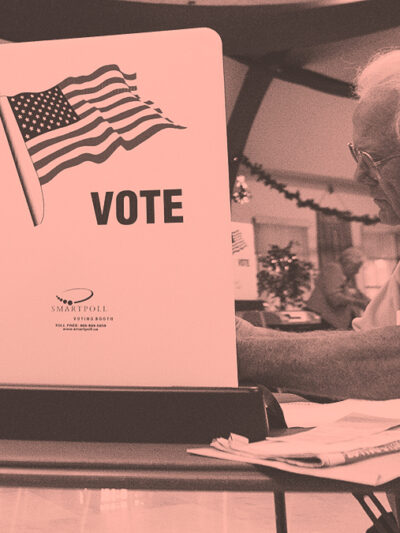
When It Comes to Voter Turnout, Ohio Youth Lags Behind
There are many reasons why youth may not show at the polls, but it seems the overwhelming majority’s thought is this: many youth don’t think their vote will ever make a difference or determine any outcomes
By Sarah Khan-Williamson

The “Ohio Student Religious Liberties Act” Explained
In March 2019, House Bill 164 aka “The Ohio Student Religious Liberties Act,” was introduced. In November, it passed the Ohio House and is now on its way to the Senate.
Recently, HB 164 has received lots of statewide and national attention. This has led to some misconceptions about what this bill will accomplish and what it will not. Below, I hope to clear up any confusion about HB 164 as well as its impact and ramifications.
First, it is important to state the ACLU of Ohio is fully on board with protecting the religious liberties of our public school students. Such accommodations and protections are not only consistent with but are required by the First Amendment to the U.S. Constitution as well as the Ohio Constitution. The Bill of Rights applies to government entities, including our public schools.
Sometimes, this can put public schools in a bind. Government generally must remain neutral when it comes to religion, faith, religious practices, and related issues. That means, as the First Amendment states, government cannot advance or inhibit religion. On occasion, schools may overreact and violate a student’s rights as they attempt to remain neutral. Other times, schools may get it wrong when they allow too much accommodation and violate that neutrality requirement.
Many supporters see HB 164 as a way to inform and provide clarity in these matters. But in reality, HB 164 only sows further confusion and clarifies very little. Below are the ACLU of Ohio’s three primary concerns with HB 164 and why we oppose it, despite our support for student religious liberties in Ohio schools.
1) House Bill 164 is Entirely Unnecessary
As mentioned, the religious rights of Ohio’s public school students are already protected by the federal and state constitutions. For that simple reason, HB 164 is unneeded. The protections and provisions of the federal and state constitutions supersede state law.
However, in attempt to provide further assistance to all stakeholders (students, schools, teachers, Ohioans, you, and me), HB 164 essentially cuts and pastes various terms and principles from existing case law and court decisions into Ohio law under the belief such efforts help. They do not.
Constitutional language and principles were purposely left broad so later generations could decide for themselves how to apply them to their current society and lives. For example – sure, we have a right to free speech. But that does not mean any and all speech at any and all times. The same is true for guns, religion, privacy, our justice system, and other areas that have sorted out when unlimited constitutional rights end and some amount of regulation or restriction is permitted.
In other words, we wisely do not list in our laws every single way the free speech protections of the First Amendment apply to our art, speech, news media, and expression. We do not do that for any of our rights. Why should we do it now with students’ religious rights, via House Bill 164? Especially when case law can and does change the legal and societal landscapes. By enshrining the language of courts into our state law, we make it necessary, post-HB 164, for the legislature to pass another bill each and every time a new court decision comes out impacting Ohio students’ religious liberties. And I can promise you the Ohio legislature will not do that.
The end result of all this is more confusion, not less.
2) The “Coursework Provision”
The section on coursework and related assignments is the most debated part of HB 164. It has also been misinterpreted by some. Under current practices, students are graded using a variety of academic standards to ensure they are learning what schools and teachers expect them to digest and learn. On occasion, students will interject their religious beliefs into such assignments. There are times this may be irrelevant or unwelcome. There are other times the opposite may be true.
HB 164 tries to provide guidance in these situations by explaining teachers should still use “ordinary academic standards of substance and relevance, including any legitimate pedagogical concerns.” Would HB 164 stop there, there would be no problem. Instead, the bill continues “and shall not penalize or reward a student based on the religious content of a student’s work.” What exactly this vague, unhelpful language means is anybody’s guess – and that is precisely the problem. Does it mean, as some proponents claim, students should not be unfairly penalized if the inclusion of religious beliefs is part of their completion of an assignment but they still demonstrate the knowledge required or expected? Or, does it mean, for example, a student can complete a term paper on biological diversity over the course of history by providing answers reflecting their faith, no matter how irrelevant or scientifically incorrect? If so, HB 164 seeks to have it both ways; grade as you normally would but do not penalize for in any way for including religious beliefs.
Perhaps the former situation is the true intention of HB 164. If so, it should be clearly reflected in the language of the legislation because, right now, this section of HB 164 can be interpreted in a variety of ways. Such confusion does not help Ohio’s students or schools. It only makes these situations unnecessarily messy.
3) The Religious Speech Problems (the most troubling provision)
While the coursework language has received the most attention, it is not the most problematic part of HB 164. That belongs to the religious speech provision that directs schools to engage in unconstitutional practices. Indeed, HB 164 reads:
A student enrolled in a public school may engage in religious expression before, during, and after
school hours in the same manner and to the same extent that a student is permitted to engage in
secular activities or expression before, during, and after school hours.
It is understandable this may sound to some like simply ensuring schools do not discriminate against religious speech. The reality is far more troubling.
Consider this example: A student club devoted to suicide prevention approaches the principal asking to use the school gymnasium next Tuesday at 2pm so their members can discuss this issue with their fellow classmates. At that assembly, they will talk about mental health, stress, and available resources.
Under HB 164, that same principal is required to allow a student religious club to have its own assembly, on the same topic, where their message can simply be the only correct answer for suicide prevention is to get right with God and religion. It need not even be another club making the request. It could simply be one student. Their own assembly need not even be about suicide. Under HB 164, it presumably could be about any topic, as long as it is religious in nature.
Perhaps a school allows students to use the public address system to make announcements. For example – the chess club will meet at 3pm today in Room 100, there will be a pep rally for the football team on Friday, and we need more volunteers to decorate for the homecoming dance. Under HB 164, the school must allow students to deliver religious messages – or even prayers – over that same PA system.
Indeed, such a broad, almost unlimited provision can and will include everything from yearbooks to school plays, the student newspaper, sporting events, and everything else. After all, under HB 164, such religious speech and expression must be accommodated “in the same manner and to the same extent” as non-religious speech of each and every kind. All while the public school also attempts to remain or appear neutral, as they are required. Much luck to them as they attempt to navigate this constitutional minefield.
Student religious liberties is an important issue that should be treated seriously. But, House Bill 164 is not needed. It does not accomplish what supporters say it will and actually moves Ohio the opposite direction. Schools will be sued. While we appreciate the concerns of HB 164 proponents, this bill does far more harm than good and that is why the ACLU of Ohio will continue to oppose it.
By Gary Daniels

Senate Bill 140 – Proponent Testimony (Written Only)
Below is our Chief Lobbyist Gary Daniels’ proponent testimony on Senate Bill 140. This was delivered to the House Criminal Justice Committee on November 21, 2019.
By Gary Daniels

House Bill 263 – Proponent Testimony
Below is our Chief Lobbyist Gary Daniels’ proponent testimony on House Bill 263. This was delivered to the House Commerce & Labor Committee on November 6, 2019.
By Gary Daniels

Everything You Need To Know About the Ohio Supreme Court’s Criminal Rule 46. FAQ!
Why is Criminal Rule 46 important? Criminal Rule 46 is the Rule of Practice and Procedure that provides all state courts with instructions regarding bail-setting procedures. This Rule therefore has the opportunity to implement bail reform across the state of Ohio. It could also choose to allow current practices to continue. Currently in Ohio, we have a two-tiered system of justice in which those who can afford their financial conditions of release go home, and those who cannot are often forced to stay in jail. We cannot allow this system to continue, and Criminal Rule 46 is one of the ways we can get the change we need. What is a Rule of Practice and Procedure? As the name suggests, Rules of Practice & Procedure govern the practice and procedures of all state courts in Ohio. These Rules include the Rules of Evidence, Rules of Juvenile Procedure, Rules of Appellate Procedure, Rules of Criminal Procedure and Rules of Civil Procedure. Criminal Rule 46 is part of the Rules of Criminal Procedure. How are Rules of Practice and Procedure created and adopted? This is a multi-step process, we broke it down here:Recommendations: The Supreme Court of Ohio’s Commission on the Rules of Practice and Procedure Reviews all rules, receives and considers proposed rules and amendments, and recommends rules and amendments for adoption by the Court.Comments: It is standard practice that when considering amendments to Rules of Practice & Procedure, the Supreme Court of Ohio publishes the proposed amendments for public comment.Review: The Commission and the Court then review the comments and determine what amendments they want to file with the General Assembly.General Assembly: The Ohio Constitution requires that all Rules of Practice & Procedure be filed by the Court with the General Assembly on or before January 15th. The General Assembly then has the opportunity to publish the proposed amendments for public comment again, hold committee hearings, or submit its own recommendations to the Court. Or, it could do nothing.Back to to the Supreme Court of Ohio: The Commission and Court will then once again review the comments received. On or before May 1st, the Supreme Court is required to file any revised amendments with the General Assembly.Back to the General Assembly: The General Assembly has the opportunity to disapprove of the amendments.Effective Date: If the General Assembly does not disapprove of the amendments, they become effective on July 1st of the year.Where are we in the Rule adoption process? Comments to the proposed amendments to Criminal Rule 46 close on November 6th. Next, the Commission and the Supreme Court of Ohio will review the comments and make changes as they see fit. Next, if they choose to move forward with the amendments, they will submit them to the General Assembly for their first review. Do Rules of Practice & Procedure have the power of law? Yes! If a previous law is in conflict with a new Rule of Practice & Procedure, the Rule trumps the law. However, a subsequent law can trump a previous Rule. (Rules of Superintendence, a different type of rule created by the Supreme Court of Ohio, do not have the power of law. But Criminal Rule 46 is a Rule of Practice & Procedure, so it does have the power of law.) Can we go over “bail” terminology?Personal Bond (aka personal recognizance): A written promise to appear for future court dates. This type of bond is NOT backed by money.Secured Bond: Money that the accused or another individual pays upfront as a security for one’s promise to appear at future court dates. There are different types of secured bonds.Full Cash bond: When the full amount of the bond is paid prior to release.10% bond: When 10% of the whole money bond amount is due prior to release.Surety Bond: Typically, when a bail bond agent posts bond in return for a 10% nonrefundable fee.Property Bond: When the accused pledges the title to the real property prior to release.Unsecured Bond: A written promise to appear for future court dates that is backed by money that is not paid upfront. However, the bond amount will be due if the accused fails to appear or comply with conditions of release.What does the ACLU of Ohio’s comment on the proposed amendments to Criminal Rule 46 recommend? Each of the recommendations included in our comment are responsive to the goal of ensuring that no individual is detained simply because they cannot afford their conditions of release. Below, we have provided a summary of our recommendations. What specifically did we ask for? See below for some of the recommendations our comment included.We need a clear definition of “bail”: The word “bail” continues to be wrongfully conflated with “financial conditions of release.” We have asked that Criminal Rule 46 include a clear definition and purpose of “bail.”We need a strong presumption of release on personal recognizance and against financial conditions: While the proposed amendments have added favorable language, such as requiring that each condition of release to be the “least restrictive,” the amendments do not provide for a presumption of release, nor do they have a presumption against the imposition of financial conditions of release. Without these presumptions, we do not believe courts will change their current bail-setting practices. Liberty is supposed to be the norm for accused individuals, and this Rule should reflect that.We need ability-to-pay determinations: Judges should be required to make an on-the-record ability-to-pay determination before setting a financial condition of release. If a judge does not make an inquiry into the finances of the accused individual, the judge will be unable to determine what bond amount will act as an incentive for appearance versus what is likely to lead to unnecessary detention. An ability-to-pay determination requirement would also stop the unconstitutional practice of detaining individuals by setting egregiously high financial conditions of bail.We need the Supreme Court of Ohio to eliminate the cost of “non-financial” conditions: The current proposed amendments differentiate between financial and non-financial conditions of release. Non-financial conditions of release, according to the rule, include GPS monitoring, and drug treatment. While listed as non-financial conditions, across Ohio, some jurisdictions force pretrial individuals to pay for these types of services. If someone is unable to pay for their services, they can be sent back to jail. We strongly urge the Supreme Court of Ohio to specify that the cost of pretrial services and conditions of release must never be borne by the accused individual.We need a right to counsel at all stages during which bail is set: The proposed amendments allow for the continued denial of counsel at the first hearing at which conditions of release are set. Bail-setting is a critical stage of prosecution and individuals should have a right to counsel at all stages during which bail is set.We need written findings on the record: Judges should be required to make written findings on the record for their conditions of release decisions. If a judge does not have to demonstrate how or why a condition is “least restrictive” and why it is necessary to assure stated goals, then the courts are unlikely to change current bail-setting practices.The Supreme Court of Ohio should better define public safety: The proposed amendments require that conditions of bail be set to protect “the safety of any person or the community.” This is too broad and as a result, it lacks guidance. Because it is not clear what constitutes safety, a judge could use the vague language as cover to set restrictive conditions. The court should be required to make findings regarding the safety of a specific person, persons, or organization.The Supreme Court of Ohio should get rid of bond schedules: We remain staunchly opposed to bond schedules. They allow for no individual consideration, and as a result, allow those who can afford bond to go home, and keep those without deep pockets in jail unnecessarily.We need bail forfeiture protections: The proposed amendments allow for financial bonds to be forfeited after the first failure to appear. However, this does not take into consideration real-life obstacles that may thwart good-faith efforts to appear or comply with conditions. We encourage the Supreme Court of Ohio to adopt a mechanism by which individuals can appeal their bail forfeiture.
By Claire Chevrier

How Halloween Inspired My Activism
For most people Halloween conjures up images of ghosts, monsters, and too much candy. For me, I’m taken back to a time I was growing my activist wings – even though I didn’t know it at the time.
When I was nine, I petitioned my own city council. I could lie and say in the third grade I was already focusing on deep social issues, but I won’t. My City Council was changing the local treat-or-treat hours from 6:00-8:00pm to 2:00-4:00pm, citing safety concerns. I was upset. I always looked forward to Halloween, and I saw this change as a direct attack on the one night of the year when kids get to dress up, knock on doors and eat as much candy as they want.
I was lucky enough to have parents that taught my sister and me to solve problems rather than simply be upset but resigned to the situation. So my sister, a neighbor, and I decided to create a petition to urge City Council to keep evening trick-or-treat hours. I don’t think I was fully aware that the First Amendment protects “the right of the people peaceably to assemble, and to petition the government for a redress of grievances,” but I was living that value in real time.
For weeks we would get home from school and knock on doors across the neighborhood asking folks to sign our petition. We would take petitions with us when we went to dinner with our parents or visited a friend’s house. Every Friday night, we would walk the stands at the local high school football game gathering signatures. We ended up collecting over 375 signatures.
We also held our own protest by picketing on the public sidewalks across from local council members’ homes with signs that read “2-4 is a bore”. Ultimately I ending up speaking at the local council meeting. “Glow in the dark stuff won’t glow, and scary costumes won’t have the same effect. Halloween won’t be fun at all. Didn’t you have fun evening trick or treating when you were young?”
Unfortunately, we did not change the hearts and minds of our council members that day; however, we staged our own counter-trick-or-treat which saw hundreds of kids through the evening. The very next year, trick-or-treat went back to 6:00-8:00pm. Justice may have been delayed, but we were victorious.
This is a silly story, but it’s a time I look back on fondly. Everyone has talents and skills. Being involved allows you to use your skills to make a positive difference and to further develop your own skills. Plus, our First Amendment rights are the foundation of a vibrant democracy, and without it, other fundamental rights, like the right to vote, would wither away.
There are many ways to get involved, to develop a voice on issues that concern you, and to make a difference in the world. Pick an issue, identify the stake holders, and build relationships. Then commit to action. For example, you can:
Get involved with a non-profit organization tackling an area you want to learn more about;
Write letters to the editor or send letters to your elected officials;
Attend local city council meetings or even just pose questions/ comments on Twitter;
Testify in the Ohio General Assembly;
Start a petition!
The list goes on.
Remember, a dedicated group, no matter how small, has the power to push for real change in their community. We all need to be active in our communities to help make them a better place. Together, we can make a difference.
By Jocelyn Rosnick


Stay Informed
Sign up to be the first to hear about how to take action.
By completing this form, I agree to receive occasional emails per the terms of the ACLU’s privacy statement.
By completing this form, I agree to receive occasional emails per the terms of the ACLU’s privacy statement.